
A fleet manager can build a careful annual fuel budget and still see the numbers change within a few months. Diesel costs respond to conditions outside a business’s control, including crude oil prices, refinery activity, regional supply, transportation costs, and seasonal demand.
For businesses across the U.S., working with a fuel wholesaler is less about predicting the next price change and more about deciding which parts of fuel purchasing can be planned in advance. Volume, purchasing periods, delivery frequency, and pricing structure can all affect how much uncertainty makes its way into an operating budget.
How Does a Fuel Wholesaler Help With Price Volatility?
A fuel wholesaler can help a business plan expected fuel volume, purchasing periods, delivery needs, and pricing options around its normal operations. Businesses with predictable demand may also consider fixed-price programs that establish a fuel unit cost for an agreed period and volume instead of leaving every purchase exposed to market changes.
What Can You Actually Control When Fuel Prices Move?
Trying to predict the lowest diesel price is different from managing fuel-price exposure.
The U.S. Energy Information Administration explains that diesel pricing reflects crude oil costs, refining, distribution, marketing, taxes, and regional conditions. Supply disruptions and seasonal changes in distillate demand can also contribute to price fluctuations.
A fleet manager cannot control those factors. The business can, however, get a clearer picture of how many gallons it uses, when demand tends to increase, which locations need fuel, and how much price movement the budget can reasonably absorb.
That information changes the purchasing conversation. Jacobus Energy’s wholesale delivery program can support individual worksites or businesses managing fuel across multiple locations. Detailed invoicing also gives customers a clearer record of fueling expenses.
Instead of asking, “Where will diesel prices be next month?” a more useful question may be, “How much of our expected fuel demand do we want exposed to next month’s price?”
Fixed Price vs. Market Price: Which Fits Your Fuel Budget?
A fixed-price program and market-based purchasing handle uncertainty differently. With market-based purchasing, the price paid changes as market conditions change. That leaves the business able to participate when prices fall, but it also leaves future purchases exposed if prices rise.
Jacobus Energy’s risk programs allow customers to fix fuel prices for periods of one to 12 months. Customers are invoiced at the fixed price until the contracted volume is reached. Program requirements include a fixed term by month, ratable purchases, a purchase commitment, and fixed prices and volumes by market.
That structure makes the volume forecast important. A fleet that regularly consumes a similar number of gallons may be in a stronger position to evaluate a fixed-price agreement because expected demand is easier to estimate. A business with highly irregular consumption may place more value on purchasing flexibility.
A fixed price should not be viewed simply as a bet that market prices will rise. Its practical value is knowing the unit cost assigned to an agreed amount of fuel during the contract period, which can make budgeting and pricing other work more predictable.
Why Does Your Fuel-Use Pattern Matter?
Price planning starts with consumption, not the market. Consider a transportation fleet with vehicles returning to the same yard every night. If mileage, routes, and equipment stay fairly consistent, the company may have enough historical usage information to estimate future gallons.
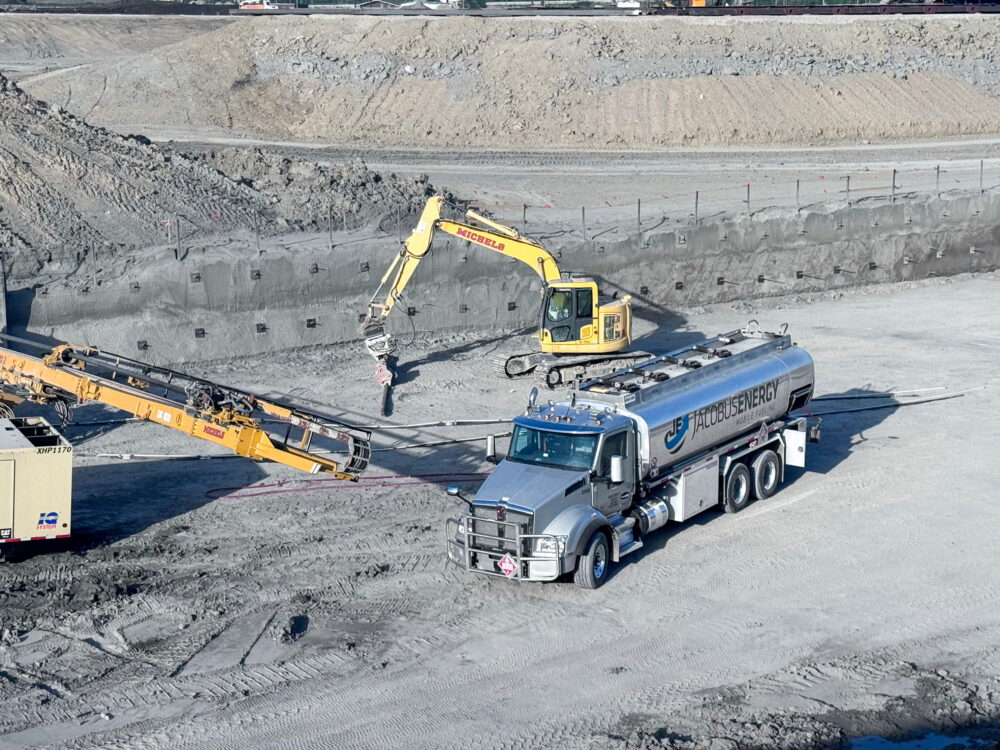
Construction creates a different pattern. One project may require substantial off-road diesel for several months, while demand may decline when that project ends. Agricultural operations may see periods of heavier diesel use tied to seasonal work.
Those differences affect how much fuel a business should plan around and how frequently it may need deliveries. Jacobus Energy’s mobile delivery includes on-road diesel, off-road diesel, gasoline, DEF, and seasonal blended diesel fuel. Fuel can be delivered directly to individual vehicles and equipment, and delivery frequency is determined based on factors such as fleet size, required gallons, and operating needs.
For a fleet manager, connecting purchasing decisions with actual consumption creates a more useful fuel plan than responding to each price movement on its own.
When This Matters Most and Who Should Consider It
Price planning becomes especially useful when fuel represents a recurring operating expense, and the business can forecast at least part of its demand. A transportation company with steady routes may want greater certainty around monthly fuel costs. A construction business bidding a long project may need to estimate what fuel could cost while the work is underway. Companies operating multiple yards may want a more consistent way to manage purchasing rather than making separate fuel decisions at each location.
Fixed pricing will not fit every operation. A business with low fuel use, unpredictable volume, or rapidly changing operating needs may prefer the flexibility of market-based purchasing. The important step is matching the pricing structure to the operation. Usage history, expected volume, purchasing period, delivery needs, and tolerance for price changes provide more useful guidance than trying to time the fuel market.
Make Fuel Costs Easier to Plan Around
Working with a fuel wholesaler across the U.S. does not remove fuel-market volatility. It can give your business more control over how that volatility affects purchasing and budgeting. Jacobus Energy works with commercial operations that need wholesale fuel, mobile fueling, and fuel risk management options. If fluctuating prices are making your fuel budget harder to manage, contact us to discuss your expected volume, delivery needs, and the pricing options available for your operation.